OpenShift and Kubernetes Application Management Core Concepts
06 Jun 2022
Prepared by: Sultan Öztürk – SEKOM SD-X & Cloud Technologies Engineer
OpenShift is Red Hat’s Kubernetes Container Platform product that can run both on cloud and on-premises infrastructures as a Private Platform as a Service. OpenShift allows you to run multiple clusters in multiple languages, automate processes, and ensure security at the application, platform, and network levels.
Why Do We Need OpenShift When Using Kubernetes?
Within the OpenShift platform, cluster services, application services, and software development services are provided under one roof.
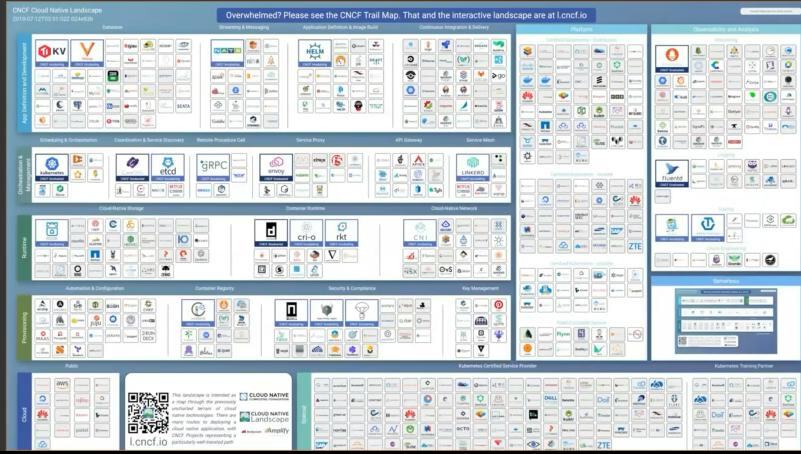
The variety of integrations within OpenShift is extensive, as seen in the list above, and it continues to grow each day.
Why Is Having Multiple Integrations Important?
For organizations, integration is crucial because no company wants its previous investments in purchased or open-source systems to become obsolete. With OpenShift, you can continue to leverage the investments made in products used in your previous system and seamlessly integrate them with OpenShift.
What Are the Fundamental Concepts of OpenShift and Kubernetes?
The smallest unit in Kubernetes and OpenShift, which shares the same infrastructure, is a container. All containers are created from container images, which are stored in image registries. Containers are then placed inside pods and used as units for future application deployments. Each pod has its own IP, allowing them to communicate with each other while remaining isolated and interconnected.
Deployment, Deployment Config, and Other Key Objects
A Deployment is a Kubernetes object, whereas Deployment Config is an OpenShift object. While a Deployment Config file cannot be used outside of OpenShift, a Deployment file can be utilized in both Kubernetes and OpenShift environments. The main distinction here is that Deployment files prioritize consistency over availability. The available Deployment strategies include Rollout, Recreate, and Custom, allowing you to choose based on your specific priorities.
Another essential object is ConfigMap, which stores configuration data required for your applications. You can customize this data based on different environment variables, such as development or production.
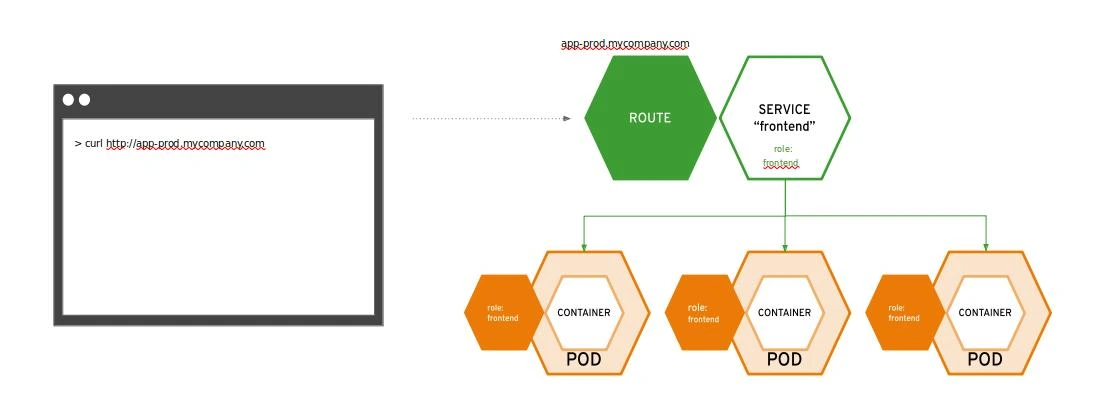
Since each pod has its own IP address, these pods communicate with each other through services. Services enable communication not only between frontend and backend applications of a project but also with other projects. If the service is to be used internally within the cluster, ClusterIP is assigned by the Master nodes. For external access, NodePort or LoadBalancer services are created based on specific usage preferences.
For services accessible to external users, Route objects containing domain name information are also created.
For more information on Red Hat OpenShift and all your SD-X & Cloud needs, feel free to contact our experienced team!
Other Posts
AI Datacenter Network Architecture | Why the Fastest GPUs Are Not Enough: The Defining Role of Network Infrastructure in AI Workloads
Meet Sekom at MWC2026 Barcelona: Network Intelligence for Real-World Operations
Ensuring Reliability and Governance in Artificial Intelligence: A Guardrail-Driven Security Framework
See all posts